In the wake of the COP30 summit, the Grand Duchy’s artists, architects and cultural institutions are putting climate at the forefront.
Across the world, cultural institutions are rethinking their impact as the urgency around climate change accelerates. The recent COP30 UN Climate Change Conference in Brazil amplified this reality, reminding governments and civil society that the transition ahead concerns everyone.
While attention often focuses on energy systems and industry, culture plays a vital, if sometimes quieter role in shaping understanding and strengthening resilience. UNESCO has repeatedly highlighted culture as an essential ally in climate action.
In Luxembourg, this shift is increasingly visible. Museums and cultural centres are adapting how they produce exhibitions, operate historic buildings and engage their communities. What emerges is a portrait of a country where creativity, sustainability and collaboration are beginning to move together.
Reusing materials and rethinking production
One of the clearest changes can be seen in how exhibitions are built. At Casino Luxembourg, director Kevin Muhlen notes that their exhibitions often involve complex, site-specific installations. “Many of our shows involve custom scenographies, which naturally raise questions about the environmental impact of materials and construction,” he explains.
This awareness has prompted his team to prioritise recyclable and reusable materials wherever possible, and to avoid unnecessary transport. Travel, he adds, “remains one of our main sustainability challenges,” but one they actively try to minimise through planning and open dialogue with artists.
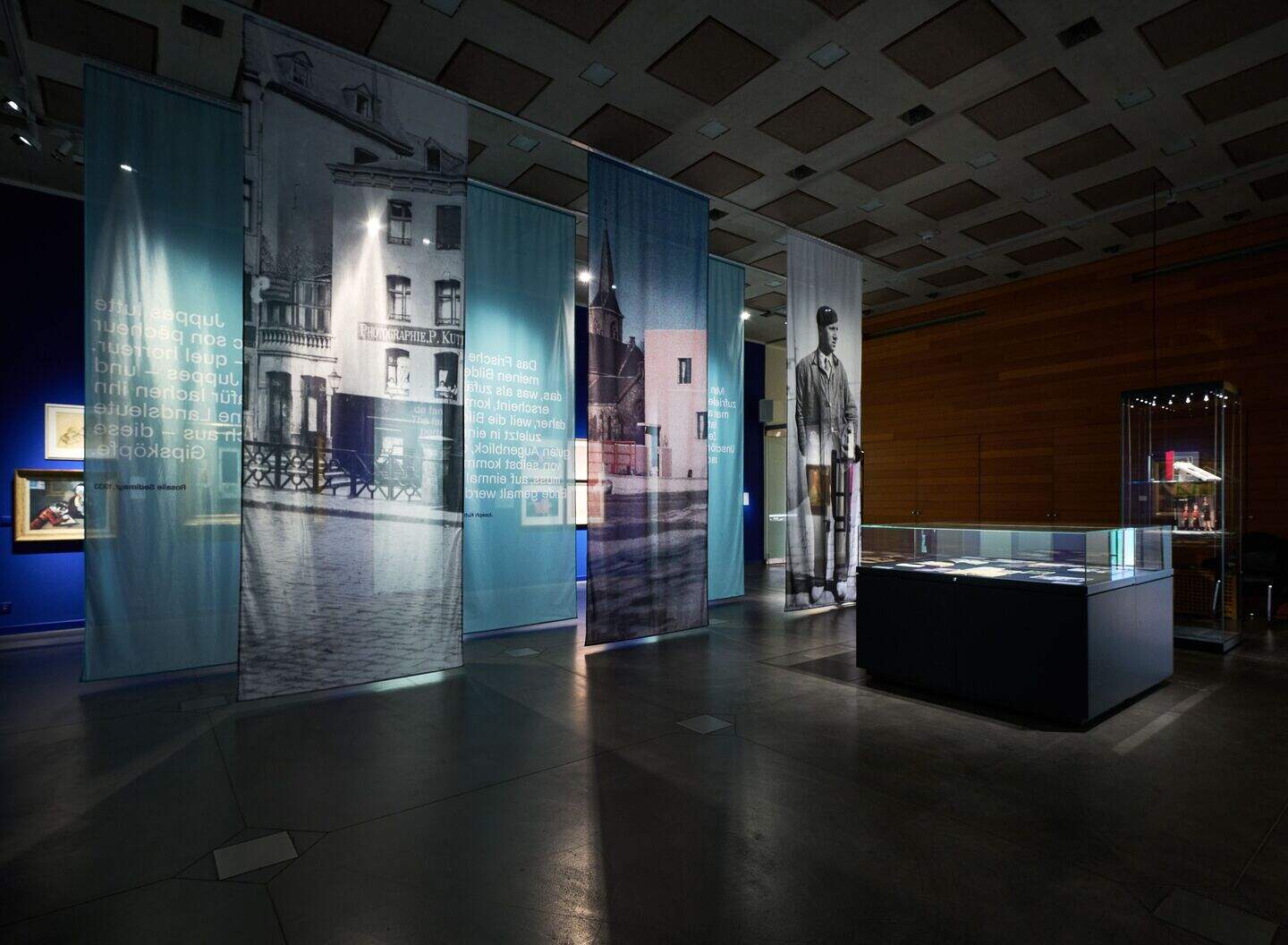
The National Museum of National Museum of Archaeology, History and Art (MNAHA) has approached similar questions through hands-on experimentation. Its 2024 exhibition “Dem Kutter seng Gesiichter” served as a true testing ground: the museum refused loans from overseas, reused existing scenography, and introduced new packaging processes.
The team also created guided tours focusing on the carbon footprint of art transport, waste generated by temporary constructions, and the energy cost of climate-controlled galleries. These initiatives demonstrated that sustainable choices can reinforce curatorial quality rather than limit it.
At Cercle Cité, sustainability is built into both production and programming. Camilla Cuppini & Marion Vergon, head of cultural programming, explain that the team reuses exhibition materials whenever possible and complements this with awareness-building activities.
Their exhibitions often include themes related to the environment, with special attention given to younger audiences, those who will inherit the consequences of today’s decisions. Balancing artistic ambition with responsible resource use is an ongoing challenge, but one Cercle Cité approaches by borrowing equipment from partner institutions, optimising its existing infrastructure and choosing technology that reduces long-term consumption.
At Mudam Luxembourg, Director Bettina Steinbrügge reinforces this change in mindset. The museum encourages artists to consider the ecological implications of their projects from the start.
Mudam avoids unnecessary construction for temporary exhibitions, prioritises reusable structures and low-impact materials, and touring exhibitions or co-productions that allow resources to be shared rather than duplicated. This is paired with a broader institutional roadmap focused on responsible procurement, reduced waste and increasingly efficient building management.
Creative solutions for adapting to architecture
Luxembourg’s cultural landscape is defined by a mixture of contemporary architecture and historic sites, and both bring their own sustainability challenges. Nowhere is this more evident than at Neimënster, where director Ainhoa Achutegui manages a centuries-old architectural complex.
She describes the institution’s daily reality as a balance between “old stones” and the need for environmentally respectful innovation.
Preserving a protected heritage site limits certain types of upgrades, yet the ecological expectations placed on cultural venues continue to grow. Transport of artists, audiences and equipment also contributes significantly to the centre’s footprint, prompting ongoing conversations about how to reduce these impacts responsibly.
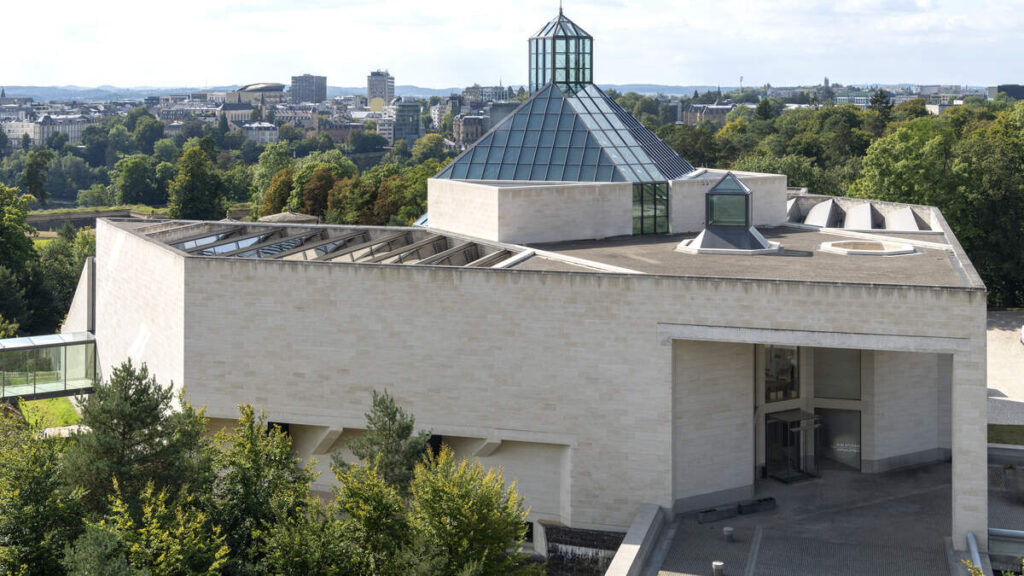
Mudam faces a significant challenge in managing the energy demands created by its iconic glass architecture. In collaboration with Bâtiments Publics, the museum is pursuing long-term infrastructural measures, closely monitoring new technical developments, improving insulation and lighting, and gradually implementing upgrades through a multi-year transformation plan aimed at reducing heat gain and overall energy consumption.
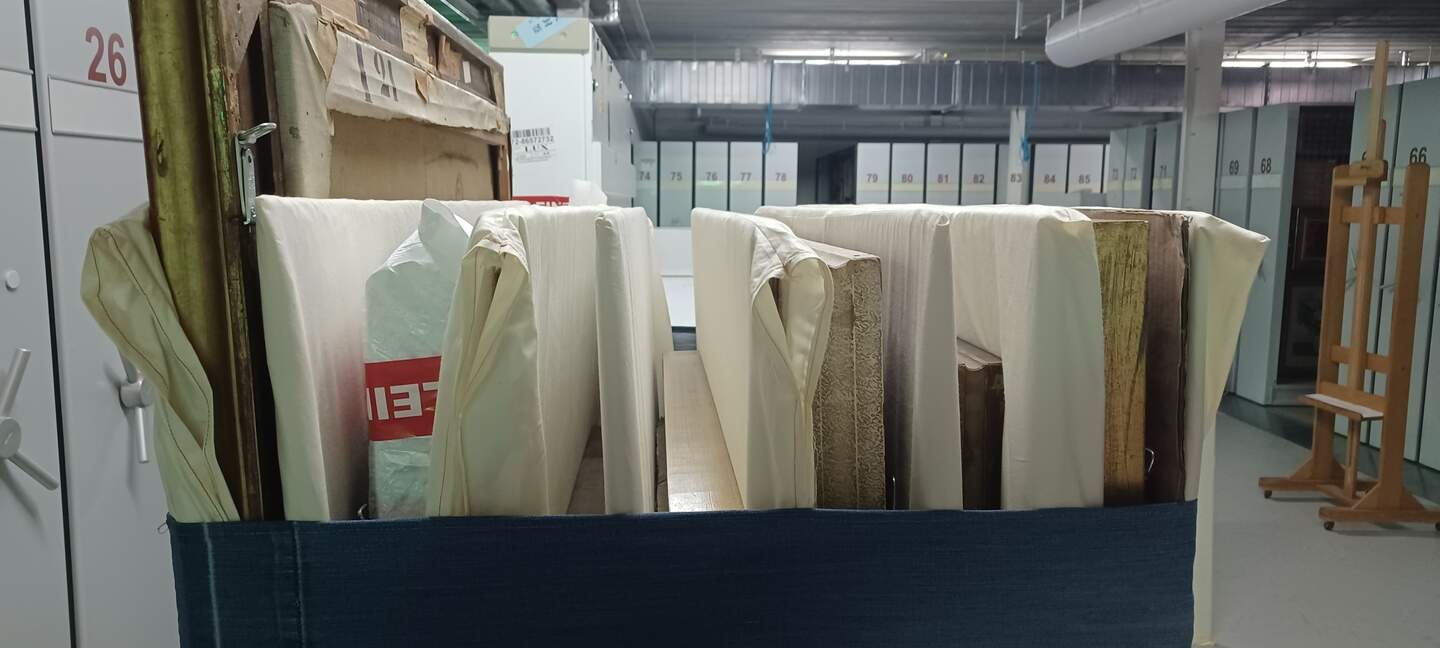
Muriel Prieur, head of department restoration, and Lis Hausemer, assistant curator of the department of fine arts, at MNAHA emphasise that conservation requirements impose strict temperature and humidity standards for artworks.
For now, these depend on energy-intensive systems. In response, the museum has introduced seasonal temperature adjustments, replaced lighting with long-lasting LED fixtures, standardised reusable pedestals and frames, and consolidated transport through shared loan crates. Even smaller changes, such as shifting cleaning schedules to reduce the time galleries remain lit, reflect a broader shift toward thoughtful, incremental adaptation.
Collaboration and shared responsibility
Perhaps the most striking development across Luxembourg’s cultural sphere is a growing sense of collective responsibility. Sustainability challenges are too complex and interdependent for institutions to tackle in isolation, and many are actively seeking ways to pool resources and share knowledge.
Casino Luxembourg is in ongoing exchanges with the ministry of culture and other venues about more structured collaboration.
One concept under construction is a “ressourcerie” – a shared materials centre that would allow institutions to sort, store and repurpose scenographic elements, tools and equipment. Such a space could meaningfully reduce waste and encourage a circular economy within the cultural sector.
MNAHA participates in international workshops and programmes where museum professionals exchange solutions, from climate-adapted conservation techniques to sustainable exhibition design. These networks enrich national practices and help ensure that Luxembourg remains aligned with broader cultural and environmental developments across Europe.
Mudam, meanwhile, collaborates with schools and universities to strengthen climate literacy and intergenerational dialogue. The museum also plans deeper involvement with the Gallery Climate Coalition, whose practical tools help institutions measure their environmental impact and put reduction strategies into action.
Across all these initiatives, one message resonates clearly: the ecological transition concerns everyone. The more institutions coordinate their efforts, and the more citizens engage with them, the faster learning spreads and the more imaginative solutions can come to life.
Click here to read the article on The Luxembourg Times.